
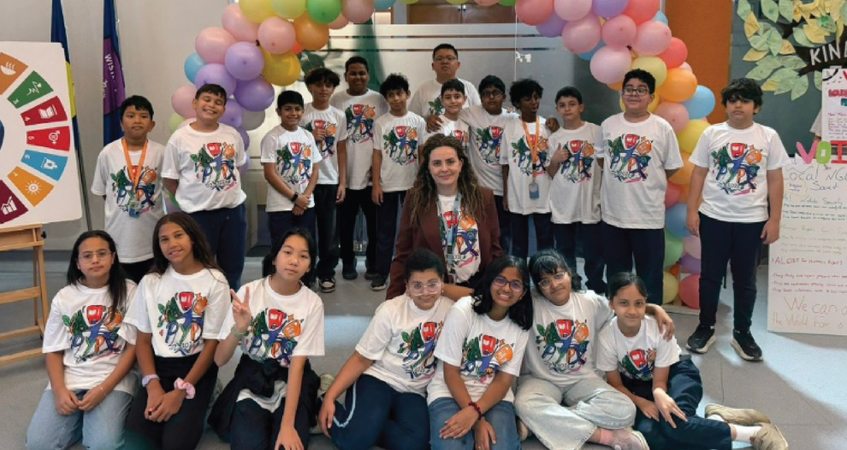
How does one feel after having accomplished a big goal in their life? Like climbing Mount Everest, for example? Does everything finish there? In fact, being at the top offers a different perspective, and you realize that the journey is actually just beginning. This is how Grade 5 students felt during their Primary Years Programme Exhibition (PYPX) at OWIS, which hosted this special event for the third year in a row, since having its first batch of Grade 5 students. This culmination point in their educational journey, where they graduate from the IB PYP, is truly one of a kind and provides them with an experience that stays with them forever.
What really makes this day so special must be the nature of independence behind it, where students are given voice and choice when picking their topics and fully taking ownership of the process. With teacher mentors occasionally checking in to make sure they are not falling behind in the timeline, students are able to choose an area of interest, identify a problem, and not only suggest solutions, but also take action. This process reflects the core philosophy of the IB Primary Years Programme. The PYP curriculum framework is built upon three interconnected pillars: the learner, learning and teaching, and the learning community (International Baccalaureate Organization [IBO], n.d.). These pillars were clearly reflected throughout the PYPX process undertaken by the students.
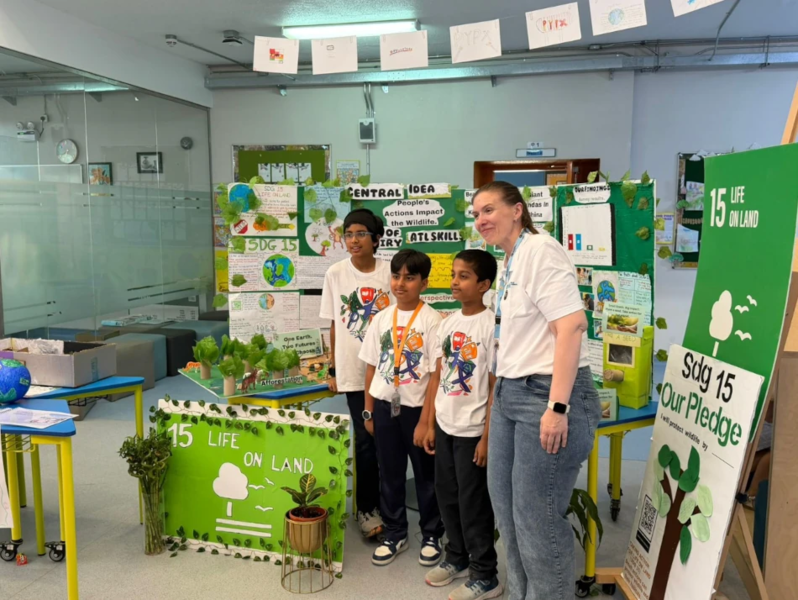
The learner pillar was demonstrated as students developed independence, agency, critical-thinking, and research skills while exploring real-world issues connected to the SDGs. Through inquiry, reflection, and action, students became more responsible and internationally minded learners. The learning and teaching pillar was evident through the inquiry-based and transdisciplinary approaches implemented during the exhibition process. Students engaged in collaborative discussions, conducted research using a variety of reliable sources, developed presentations, and proposed solutions to authentic global challenges. Teachers acted as facilitators, guiding students through questioning, reflection, and meaningful learning experiences rather than direct instruction alone.
The learning community pillar was also strongly represented, as the PYPX process encouraged collaboration between students, teachers, parents, mentors, and the wider school community. Students shared their findings through presentations, discussions, and action plans, demonstrating how learning can extend beyond the classroom and contribute to positive social change. Altogether, the PYP Exhibition served as a practical example of how the three pillars of the PYP curriculum framework support holistic, student-centered learning. Throughout the PYPX journey, students applied the six steps of the inquiry cycle that are at the center of the IB: Tuning In, Finding Out, Sorting Out, Going Further, Making Conclusions, and Taking Action. The process begins with choosing a topic. Students inquire into and research areas they are passionate about. They understand how important it is to “do what you love, and love what you do,” so they select topics and fields that they are truly interested in. Since many initiatives within Saudi Vision 2030 align closely with the Sustainable Development Goals (SDGs), we decided to keep our PYPX focus connected to the 17 SDGs.
The next step is identifying the problem. Our inquirers are well aware that being an IB learner requires one to be a global citizen, and for that reason we often find students interested in working on issues that are not only local, but global as well. This makes us, as a school, even prouder to see how they care about matters that may not be geographically close to them, yet still matter deeply. Taking action is probably the cherry on top of the whole process. Students come up with original ideas such as writing letters to stakeholders or organizations, explaining their concerns and offering solutions, sometimes donating money through approved Saudi platforms, or raising awareness about topics that they believe need more attention nowadays.
Through finding out and sorting out engagements, our inquirers learn more and continue adding to their research journals, while staying motivated to keep track of the process. They learn how to summarize and paraphrase, as well as reference and give credit where needed. As we continue living in a world where information is easily accessible, it becomes crucial for students to master these skills. Following the stages of going further and making conclusions, students invite guest speakers, conduct questionnaires, make discoveries, and decide on the action they want to take. At this point, they get one step closer to the big day: the exhibition itself. Some groups decide to organize charity sales and collect funds to donate to their cause. Others prepare and distribute flyers, brochures, posters, podcasts, and stickers in order to raise awareness and complete their action plans. Seeing students in action as a homeroom teacher is probably one of the best parts of this entire process.
Then the day finally comes. After all the hard work and six weeks of independent guided inquiry, inquirers turn into presenters. All of a sudden, they display their skills in maintaining eye contact while using persuasive communication to convince guests, parents, teachers, and stakeholders that they have done a great job and started a change in the world. Because honestly, the change starts with them. They are the future, and whatever paths they choose, they are getting ready to lead, create, and make a difference. And there they stand, at the top of Mount Everest, awaiting the adventures that lie ahead.
Written By,
Ms. Adlira Kolcu
Grade Lead (Upper Primary)


