Part of the Nord Anglia family, The British International School Abu Dhabi offers a transformational education in a warm, inclusive community, empowering every student to excel, embrace global opportunities, and shape their future.
In a world of screens, short-form content and constant digital distractions, helping children develop a love of reading has never been more important. Recent research suggests that fewer children are reading regularly for pleasure, yet reading remains the foundation of learning. A child who reads confidently is better equipped to access knowledge across every subject, from science and mathematics to history and the arts.
The benefits extend far beyond academic success. Reading helps children develop vocabulary, communication skills, empathy, creativity and resilience. It allows them to explore new perspectives, understand the world around them and enjoy moments of calm and reflection. In a fast-paced and increasingly digital world, these skills are more valuable than ever.
Our Approach at BIS Abu Dhabi
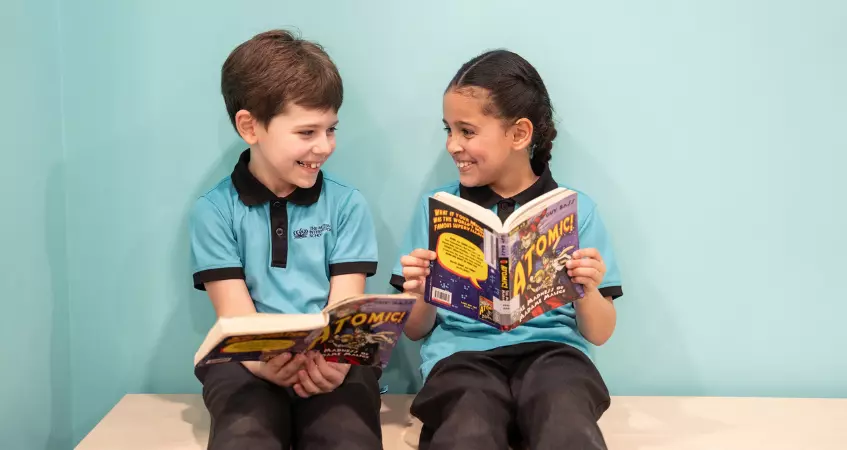
At The British International School (BIS) Abu Dhabi, we believe reading lessons should create readers, not simply children who can read. Through high-quality texts, rich vocabulary teaching and engaging activities, we aim to foster curiosity, enjoyment and a lifelong love of books. Whether through drama, discussion, creative writing or technology-enhanced learning, our goal is to help every child see reading as something meaningful and enjoyable.
Reading is celebrated across our school community through events such as World Book Day, when students dress up as their favourite book characters and come together to celebrate books, stories and imagination.
Supporting Reading At Home
While schools play an important role, parents remain one of the biggest influences on a child's reading journey. The good news is that supporting reading at home does not need to be complicated.
Here are a few simple ways families can encourage reading:
Set aside 15-20 minutes each day for reading, whether independently or together.
Let children choose books that match their interests, including graphic novels, magazines and non-fiction texts.
Read aloud together, even as children grow older, to expose them to new vocabulary and richer stories.
Listen to audiobooks during car journeys and discuss the story afterwards.
Visit libraries and bookshops regularly, allowing children to explore and discover new books.
Use everyday reading opportunities, such as recipes, instructions, signs and menus.
Most importantly, let your child see you read. Children are more likely to value reading when they see the adults around them enjoying it too.
The primary years are a crucial time for developing reading habits that can last a lifetime. By working together, school and home can help children build the confidence and curiosity that turn reading from a skill into a lifelong source of learning and enjoyment. After all, one of the greatest gifts we can give our children is a love of reading.
More About The British International School Abu Dhabi
Part of the Nord Anglia family, The British International School Abu Dhabi offers a transformational education in a warm, inclusive community, empowering every student to excel, embrace global opportunities, and shape their future.

.png)


