
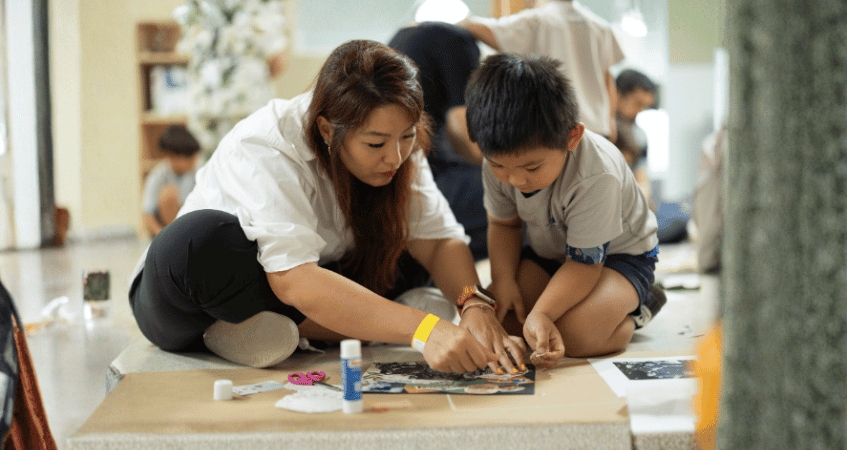
Modern family life rarely slows down. Between work, school, extracurricular activities, and the constant presence of technology, many families spend their days moving from one commitment to the next. Yet some of the most important moments in a child's development happen not during busy schedules, but in the quiet spaces between them. This article explores why intentional family time is essential for children's emotional wellbeing, character development, and lifelong learning.
The pressure to keep moving
Today's families live in a world that celebrates productivity. Calendars fill quickly, routines become increasingly busy, and even free time often comes with a plan.
It is easy to believe that giving children more opportunities, more activities, and more experiences will naturally prepare them for the future.
But childhood was never meant to be a race.
Children also need moments where nothing extraordinary is happening. Moments to talk, observe, wonder, laugh, and simply be together with the people who matter most.
These quiet moments are far from unproductive. They are where relationships deepen, and children develop a sense of security that stays with them long after childhood.
The learning that happens at home
Schools play an extraordinary role in helping children grow academically, socially, and emotionally. Yet some of the most lasting lessons cannot be taught in a classroom alone.
- Children learn empathy by watching how adults treat one another.
- They learn gratitude around the dinner table.
- They develop confidence when someone listens carefully to their ideas.
- They learn respect through everyday conversations, shared routines, and family traditions.
These moments may appear ordinary, but they quietly shape character, emotional intelligence, and resilience.
Learning does not pause when the school day ends. In many ways, it continues in its most meaningful form at home.
Presence matters more than perfection
Many parents wonder whether they are doing enough.
Should they schedule another activity? Introduce another enrichment opportunity? Find one more educational experience?
More often than not, what children remember most is not the perfectly planned day.
- They remember who was fully present.
- A shared meal without distractions.
- A conversation before bedtime.
- A walk without a destination.
- A parent who paused long enough to truly listen.
These everyday experiences help children feel seen, valued, and emotionally safe, creating the foundation from which confidence and independence naturally grow.
Why slowing down is part of learning
In education, we often focus on achievement, progress, and measurable outcomes. Yet healthy development also depends on something less visible: the opportunity to slow down, reflect, and connect.
When families create intentional moments together, children develop skills that cannot be measured on a report card but matter deeply throughout life. They become better communicators, stronger problem-solvers, more empathetic friends, and more confident learners.
These are the qualities that help children flourish not only at school, but in every stage of life.
A shared responsibility
The strongest educational experiences are built through partnership.
Schools provide knowledge, guidance, and opportunities for exploration.
Families provide belonging, values, and the everyday experiences that shape who children become.
Together, they create an environment where children can thrive academically while also growing into thoughtful, compassionate, and resilient individuals.
In a world that rarely slows down, choosing to spend intentional time together may be one of the most valuable investments families can make—not only in their children's education, but in their future.


