
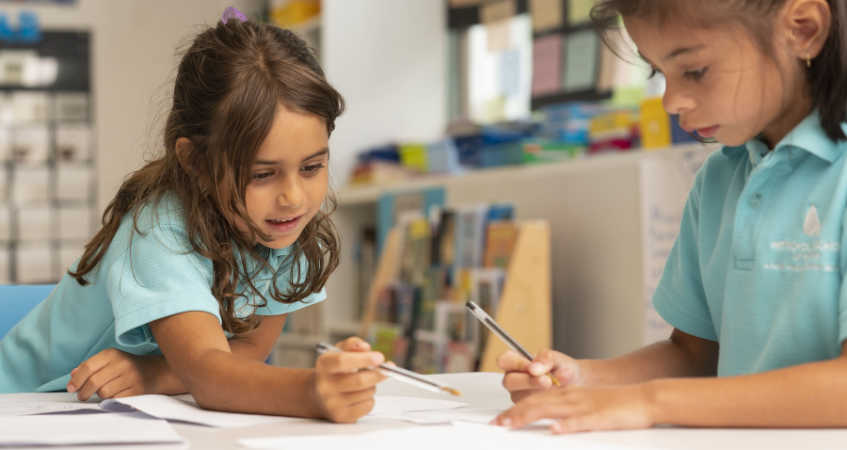
Raising a child outside of their home culture brings a unique set of challenges. These "Third-Culture Kids" (TCKs) are usually great at seeing the world from different perspectives and learning languages, but the constant moving can be tiring. They often struggle with figuring out where they fit in or having to start over socially every few years. At the Metropolitan School of Panama (MET), we have seen that the International Baccalaureate (IB) Continuum gives these students a solid foundation. By using the same educational approach from the early years all the way to graduation, the IB gives students a sense of consistency, helping them grow with intention rather than just reacting to the changes around them.
One of the biggest internal conflicts for a child who moves often is simply answering the questions "Who am I?" and "Where do I belong?" The IB curriculum tackles this by making self-reflection a normal part of the school day. Instead of just studying culture as a topic in a book, students are encouraged to think about their own background and how it fits into the wider world. This starts early at the MET. In the Primary Years Programme (PYP), children look at themes like "Who We Are," which gives them the words to describe their experiences. This continues through the Middle Years (MYP) and the Diploma Programme (DP), helping older students build a sense of self that doesn't depend on which city they happen to live in.
While TCKs are known for being adaptable, there is a big difference between just trying to survive a change and actually navigating it well. The IB’s inquiry-based approach changes the dynamic. It teaches students to ask questions about their surroundings and make decisions based on evidence. This means that when a student faces a move, they aren't just blending in to get by; they are keeping their own independence. Throughout the program, the focus on reflection helps students process the challenges they face, turning difficult moves into opportunities to build real resilience.
For families who move frequently, the practical benefit of the IB is that it is the same everywhere, but the emotional benefit is the community it builds. Because the curriculum is global, it feels familiar academically no matter the country. Beyond the classwork, though, it connects students to other kids who understand what it is like to move around. At the MET, this connection is strengthened through service learning and group projects. These activities help students feel grounded in their local community, making them feel like they are part of something here, even if their time in Panama is limited.
Looking ahead, the goal is to get these students ready for whatever comes next, whether that is university in another country or another international move. The academic work in the Diploma Programme (DP) teaches independent thinking, time management, and research skills. For a third-culture kid, these aren't just study skills; they are tools for handling life in new environments. The rigor of the program ensures that they leave the MET with the maturity to handle themselves well, wherever they end up.
Ultimately, the feeling of belonging is probably the most important part of the TCK experience. The MET supports this by having a very diverse environment, with students from over 45 different nationalities. This isn't just a statistic; it is a daily reality where having a global background is normal. Through inclusive classrooms and school traditions, the school creates a space where being different is expected and welcomed.
If you are interested in discussing how the MET can support your family’s move, please reach out to our admissions team or arrange a visit to the campus.
One of the biggest internal conflicts for a child who moves often is simply answering the questions "Who am I?" and "Where do I belong?" The IB curriculum tackles this by making self-reflection a normal part of the school day. Instead of just studying culture as a topic in a book, students are encouraged to think about their own background and how it fits into the wider world. This starts early at the MET. In the Primary Years Programme (PYP), children look at themes like "Who We Are," which gives them the words to describe their experiences. This continues through the Middle Years (MYP) and the Diploma Programme (DP), helping older students build a sense of self that doesn't depend on which city they happen to live in.
While TCKs are known for being adaptable, there is a big difference between just trying to survive a change and actually navigating it well. The IB’s inquiry-based approach changes the dynamic. It teaches students to ask questions about their surroundings and make decisions based on evidence. This means that when a student faces a move, they aren't just blending in to get by; they are keeping their own independence. Throughout the program, the focus on reflection helps students process the challenges they face, turning difficult moves into opportunities to build real resilience.
For families who move frequently, the practical benefit of the IB is that it is the same everywhere, but the emotional benefit is the community it builds. Because the curriculum is global, it feels familiar academically no matter the country. Beyond the classwork, though, it connects students to other kids who understand what it is like to move around. At the MET, this connection is strengthened through service learning and group projects. These activities help students feel grounded in their local community, making them feel like they are part of something here, even if their time in Panama is limited.
Looking ahead, the goal is to get these students ready for whatever comes next, whether that is university in another country or another international move. The academic work in the Diploma Programme (DP) teaches independent thinking, time management, and research skills. For a third-culture kid, these aren't just study skills; they are tools for handling life in new environments. The rigor of the program ensures that they leave the MET with the maturity to handle themselves well, wherever they end up.
Ultimately, the feeling of belonging is probably the most important part of the TCK experience. The MET supports this by having a very diverse environment, with students from over 45 different nationalities. This isn't just a statistic; it is a daily reality where having a global background is normal. Through inclusive classrooms and school traditions, the school creates a space where being different is expected and welcomed.
If you are interested in discussing how the MET can support your family’s move, please reach out to our admissions team or arrange a visit to the campus.


